We Are Done With Fake Democracy And Undisguised Top-Down Exploitation

There is only one solution for the insane mess that goes under the name of ‘democracy’ to day, and that is to return to human scale largely self governing communities.

This was the great cry that went up in 1381 as the farmer revolutionary Wat Tyler jumped up onto a hay cart to denounce the despotic power mongering of the barons operating under the mantle of King Richard II. It was the pronouncement that sparked the ‘peasants revolt’.

Wat and his loyal army of peasants struck a highly resonant chord amongst the down-trodden countryside community of that time. Communities forced to pay poverty inducing tithes to the despotic barons while struggling to feed their families on the meagre acreage accorded to them.

If that sounds familiar, it’s hardly surprising. Just substitute ‘government’ for barons and ‘taxation’ for tithes and one immediately sees how the top down grip over working people has failed to change over the past six hundred or so years.

Keeping that fact in mind, now add the more recent historical advent of big banking, big pharma, monopolised media, global surveillance systems, the military industrial complex and the political/corporate centralisation of power – and you will have in front of you the main new tools of oppression we are faced with today.

The tools may be different but the repression is the same. What is missing is the revolt.

Now when one stops to really consider this situation, we are ready for such a revolt. We are done with fake democracy and undisguised top-down exploitation. The fact that it is tolerated is more a reflection of a lethargic and lack-lustre state of mind, than the fact that to be a slave is a tolerable condition. It isn’t and will never be.

There is an earthy, honest element within the family of man, that has not given-in to the seduction of ‘convenience’ and the shallow narcissistic materialism on display to day. There is an element capable of recognising that, thanks to the increasingly despotic powers of central control, centuries of hard fought gains in justice and dignity now hang by a perilous thread.

Some inspired counterforce needs to rise-up to reinstate them. A Wat Tyler; a people’s revolt; the revival of truth over the lie.

England is a country with a reputation for standing-up for the rights of the individual. For freedom.

So where are these qualities hiding today?

In 2020, with this country half way out of the vampiric clutches of the European Union and half way through a grim story of government imposed home imprisonment, insane ‘social distancing, mad masks and the promise of a completely useless CV-19 testing programme – what are the prospects for the future of the good people of this notorious island?

How can the citizens of 21st century Britain break free?

Wat Tyler is our clue “England should be a nation of self governing communities” declared Tyler as the answer to the relentless top down repression exerted by the arrogant barons.

The peasants revolt, fought with pitchforks, machetes and whatever other weapons could be fashioned out of farmyard tools, took on their oppressors and gave them a good hiding, until the farmer’s hero was publicly knifed in the back in front of the crowd at Smithfield in London, while meeting in open air debate with King Richard II, to negotiate the future of the farming community he had so bravely led out of slavery.

There is unfinished business to be addressed here. Too many times the tyrannical forces of Westminster have pretended to negotiate a better deal for the electorate they are supposed to represent. Too many times they have deceived and betrayed their constituents. Too many times they have sold-out to the forces of greed, power and arrogance. Too many times.

We have now arrived at the point of no return. The madmen and women of Westminster are mocking their electorate with complete disdain. Disdain for the basic needs and rights of all citizens. They are marionettes of the swingeing banking moguls corporate giants and multi billionaire families who between them dictate the agenda for the greater part of the world. The man on the street and in the field is simply a pawn in a calculated, preplanned attempt to enslave humanity.

It’s past time to follow Wat’s proclamation. It’s time to break-out of the centralised control system once and for all and to re-establish ourselves in human scale communities, with human scale technologies and human scale farming practices.

We need to ditch government and become “self governing” so as to run our own lives on our own terms and at our own discretion.

Destiny beckons. The people will rise!

The Worst of All Possible Worlds? Echoes of Orwell’s Dystopian 1984. Mass Surveillance, Police State Rule, Struggle to Survive…

Longterm harm caused by US policies at home and abroad are far removed from a Panglossian best of all possible worlds view.

What’s going on has echoes of Orwell’s dystopian 1984.

Both right wings of the US war party wage forever wars against invented enemies.

Mass surveillance, controlling the message, and countering resistance are what police state rule is all about, how the US operates domestically, what it wants imposed on other nations worldwide.

The disparity between super-wealth and growing poverty in the US is greater than any time since the 19th century gilded age.

The nation’s economic policy elevates all yachts to unprecedented levels while protracted main street Depression harms ordinary Americans with nothing ongoing to change things.

Countless millions of US households face unacceptable choices between paying rent or servicing mortgages, seeking increasingly unaffordable medical care when needed, heating homes in winter, and feeding family members.

The struggle to survive in the US gets harder because of indifference toward public health and welfare by its ruling class.

A massive disconnect exists between soaring equity prices and dismal main street economic conditions gone largely unaddressed — Depression conditions exceeding the worst of the 1930s.

Before economic collapse, economist David Rosenberg explained fundamental structural weakness in the US economy, saying:

There’s been a decade of “very little productivity growth, very little capital spending, a recession in nonresidential construction.”

Consumer spending that accounts for around 70% of GDP alone “ke(pt) the glue together” — the underpinning it provided now gone from economic collapse producing record-high unemployment.

As for the roaring bull market in recent weeks, it’s from “financial engineering,” an ocean of liquidity fueling speculation, a “Potemkin bull market.”

Economic fragility is so profound that things are unable to keep from cratering further if interest rate rise to low 1930s levels.

Likely to remain at near-zero for the foreseeable future in the US “tells you that we have a very weak longterm economic outlook,” Rosenberg explained, adding:

There’s no precedent for shutting down the US and global economy for a considerable time that caused record-high unemployment and GDP collapse.

Rosenberg expects a 40 – 50% Q II decline, followed by a Q III bounce off the bottom, calling it “a square root sort of a recovery.”

“There’ll be some activity. But there is no return to normality” for an unknown period of time ahead.

“We’re not going to get a perpetual increase in production and hiring and get the unemployment rate back down without demand.”

“There’s no playbook” to explain how things got to the present dismal state.

Millions of US jobs have been “eliminated permanently.” Ones available are “low skilled, low value-added” ones.

“We don’t produce anything anymore. (We’re) a society and economy (based on financialization), entertainment and leisure and restaurants and retail.”

Long ago industrial America with high-pay/good benefits jobs is largely gone, offshored to low-wage countries by corporate America with acquiescence from Washington.

Given unprecedented things going on, Rosenberg said “the confidence intervals around any (economic) forecast are as wide as I’ve ever seen, and in 35 years in this business, I’ve seen a lot.”

Economist John Williams calls the US economic system “bankrupt.”

Unlimited amounts of money are being spent “to prevent an immediate (house of cards) collapse,” adding:

“We have about 40 million unemployed (in the US) which is about a 40% unemployment rate and not 13% claimed by the government.”

US inflation as it was calculated pre-1990 is around “9 per cent,” not the phony official number.

Along with protracted main street Depression, no end of it in prospect, US anti-China, anti-Russia, anti-Iran, anti-Venezuela, anti-North Korea, anti-other nations free from its control risks possible global war ahead by accident or design — no matter which wing of the one-party state is in power.

US rage to control other nations, their resources and populations makes the unthinkable possible.

Aware of the threat posed by Washington, Russia’s updated nuclear containment policy includes use of these weapons if its homeland is attacked by a foreign power, stating:

“The Russian Federation views nuclear weapons solely as a means of deterrence whose employment is a last resort and forced measure, and (after) taking all necessary efforts for reducing the nuclear threat and preventing the escalation of inter-state relations that can provoke military, including nuclear, conflicts.”

Moscow’s nuclear deterrence policy sent a message to Washington that harsh retaliation will follow a Pentagon attack on its territory if occurs.

China is preparing for possible confrontation with the US. So is Iran.

Weeks earlier, Trump regime war secretary Mark Esper said an “era of great power competition…means we need to focus more on high intensity warfare going forward.”

“(O)ur long-term challenges are China, No. 1, and Russia, No. 2.”

“(W)hat we see happening out there is a China that continues to grow its military strength, its economic power, its commercial activity, and it’s doing so, in many ways, illicitly, or it’s using the international rules-based order against us to continue this growth, to acquire technology, and to do the things that really undermine (US-led Western) sovereign (and) the rule of law (sic).”

Esper barely stopped short of a declaration of war. China and Russia won’t subordinate their sovereign rights to US interests.

Nor will Iran, Venezuela or North Korea. Nor should any nation.

Washington’s permanent war policy risks eventual use of thermo-nukes able to destroy planet earth and all its life forms if used in enough numbers.

All sovereign independent nations on the US target list for regime change threaten no one.

Yet preemptive US war on them is possible because imperial USA tolerates no challengers to its rage for absolute control.

War is never the answer. Yet time and again it’s the US option of choice to advance its imperium — an agenda posing an unprecedented threat to everyone everywhere.

How To Successfully Manage Concurrent SHTF Scenarios – we’ve been hit with a pandemic, food shortages, being taken to the brink of a financial collapse, and now, social unrest and rioting

The year 2020 is one that will go down in history. It has proven itself to be “the shambolic year.”

If you’re not familiar with that word, I just encountered it myself. It means, “Chaotic, disorganized or mismanaged.” Even leaving the part about whether or not it has been mismanaged aside for now, it has clearly been chaotic and disorganized; and we’re not even halfway through the year yet.

From a survival point of view, so far we’ve been hit with a pandemicfood shortages, being taken to the brink of a financial collapse, and now, social unrest and rioting. While none of these problems have been so severe as they could have been and none have put us in extreme danger, each of them could have. All of them are things that are normally looked at as serious events within the realm of preparedness and survival.

This series of disasters or near-disasters has brought up a very valid concern. We all tend to look at disasters as stand-alone events, where they come after us one at a time, with nothing else interfering. As such, we can deal with the various problems caused by that particular disaster. While there may often be some overlap from one problem to another, such as a financial collapse causing social unrest and violence, by and large, we look at these problems as separate events.

But as we’ve all seen over the last few months, the real world isn’t that polite and organized. It’s even become a joke, with memes showing up online, asking if it is still Coronavirus season or is it now riot season so that the person asking the question will know whether to take their mask or their rifle with them to work.

What’s to say they shouldn’t take both?

I know, that destroys the joke. But the meme clearly illustrates the confusion that’s going on in our country today. It’s just about reached the point of becoming difficult to know exactly what the disaster de jour is. What we were mostly concerned about yesterday isn’t the problem that we’re facing today. At least, it isn’t if you pay attention to what the media says.

This is dangerous. We all depend on the media for information, to one extent or another. But as the media has shown us, time and time again, their attention span is incredibly short. That’s especially true in this “never Trump” era, where they are suffering from TDS. If they can’t make it into a story to attack the president in some way, it’s as if they aren’t interested in it at all. Basically, if it isn’t the outrage of the week, they’re just not interested.

We’ve seen this time and time again, but now we’re seeing it in a new and dangerous light. Days before George Floyd’s tragic murder, the mainstream media was fixated on how dangerous it was for churches to reopen, ignoring public safety. But once the protests started, it was apparently no longer dangerous to ignore the need to wear masks and practice social distancing. As many others have pointed out, protesting obviously makes one immune to the ‘Rona.

Concurrent Disasters do Happen

As we’ve all seen, concurrent disasters can and do happen. Just because a new one comes along, doesn’t mean that we can forget about the old one, as the media does. Rather, it means that we now have to manage more than one problem at a time. So just how do we do that?

In order to figure out how to deal with this, let’s start with a simpler example than the problems we’re facing now. A problem which combat medics are trained to deal with, each and every day they are deployed. That is, dealing with a wounded soldier in a hot zone.

The normal rule of thumb with anyone who is wounded is to control the bleeding. Depending on the injury, a person can bleed out, or at least bleed out enough to cause irreversible damage, in minutes. So it makes sense to stop bleeding before going on to anything else. But if the patient that the medic is working on isn’t breathing, that takes higher priority. So, even though they might slap a compress on the wound or even put on a combat tourniquet, they’ll get to working on the airway and getting that soldier breathing as quickly as possible.

But even while getting that patient breathing is the highest possible medical priority that medic might encounter in treating that patient, that may not be the highest priority they have to deal with. If someone is shooting at their patient or at them, while treating that patient, they may have to defend that patient’s life, before they can save it, especially if they don’t have adequate infantry support.

So here we have three different emergency priorities that the medic has to balance:

  • Protect the patient’s life
  • Get the patient breathing
  • Control the bleeding

Everything else comes after that; and there’s plenty of other “after that” for the medic to deal with. But if they can’t take care of those three things, then none of the rest of it will matter. How quickly they deal with those other things may depend on a variety of factors, such as how quickly medieval comes in, whether there are other casualties to deal with, and whether they are under fire. In some circumstances, they may not get to deal with the “after that,” because of having to care for other casualties.

It all boils down to priorities and the priorities boil down to saving a life. Just like that combat medic, you and I need to prioritize our efforts on those things which will save lives, especially those of ourselves and our families.

We’re used to thinking of this in a wilderness survival situation, where we are taught that we need to stop traveling two hours before sundown so that we can gather fuel, start a fire and set up a shelter for the night. Why those things? Because they are necessary to complete our number one survival priority, that of maintaining our body’s core temperature.

But how about the current situation?

How do we apply this to the risk of COVID-19, as opposed to the risk of violent rioting?

Clearly we have to be prepared to protect ourselves from both. The risk of catching the disease hasn’t been diminished in any way by the more recent problems. All that’s happened is that another danger has been added on top of it. We need to be prepared to deal with both.

But if push comes to shove, the riots are a bigger risk to those who get in their way, than COVID is. While only a very small percentage of people are attacked and beaten in the rioting, in the cases that people are, the results are serious; they are either killed or seriously injured.

On the other hand, the chances of catching the Coronavirus are clearly higher than that of being beaten during a riot, unless you are a business owner trying to protect your business. The revised RO rate out of the CDC is much lower than it was before. So is the mortality rate, bringing COVID-19 almost down to the level of the flu. While it might still kill you, it probably won’t, unless you have underlying health problems. Even then, it will take it a few weeks to put you under.

See the difference? What makes the riots a greater risk is the chance of dying and how soon death would occur. This is the standard we must apply, whenever we’re looking at multiple risks. We have to focus on the thing that has the greatest chances of killing us, dealing with that thing first.

This isn’t to say that we should totally ignore other risks. By no means. It means we allow the greatest risk to become the framework that we use in determining our reaction plan. Everything else then gets fitted into it, in such a way as to ensure that every risk is covered, as reasonably well as possible.

In other words, take your rifle to protect yourself with, but make sure you wear a mask as well.

Actually, better than taking your rifle is to avoid the areas where demonstrators are likely to gather and riots are likely to occur. If you happen to be somewhere and a crowd starts gathering, then make sure you get out of there. I don’t care how many rounds you carry, taking on an angry mob by yourself is a sure recipe for disaster, and it’s one where you’re the main dish.

Going forward, we all need to reevaluate our disaster planning, from the viewpoint of seeing if we are truly ready to deal with multiple disasters at one time. As part of that, we need to have a good enough understanding of the various survival requirements of each of the various scenarios we might face. That’s needed, in order to create an integrated list of everything you have to do, in the combined situation.

Of course, that’s going to be something you can’t really do in advance; because there’s no real way of knowing what combination of disasters any of us are going to face. However, it’s not something any of us can afford to ignore, especially at the point of time when that second or third disaster shows up. It is at that time, we need to evaluate how the two disaster scenarios fit together so that we can ensure that we don’t miss an important element of protecting ourselves.

That’s the risk we all face right now. We have yet to see if the masses of people out demonstrating and rioting are going to cause an uptick in the number of COVID-19 cases. It will be two weeks before we know that. If the disease is as deadly as the mainstream media was preaching as recently as last week, a lot of those protesters are going to soon be sick. We’ll just have to wait and see.

In the meantime, it only makes sense for us to prepare for a second wave of the virus, while we do everything we can to ensure that we don’t get caught in the midst of any riots.

Defund, Reform, or Disband US Police? What About the Pentagon, CIA, NSA, US Gulag, and Wall Street Owned Fed Etc!

Indeed police killings, brutality, and its other unacceptable practices against America’s most disadvantaged are a major societal problem needing correction.

Cutting its funding or even replacing it with an alternate societal control system won’t fix things.

The problem isn’t cops. It’s power elites controlling them.

It’s state-sponsored inequity and injustice, privileged interests served exclusively at the expense of exploiting most others domestically and abroad.

US instruments of control go way beyond state and local police.

The Wall Street owned and controlled Fed has supreme power over all others by controlling the nation’s money, credit, debt, and ability to manipulate markets for private enrichment.

In his book titled “Tragedy and Hope,” historian Carroll Quigley explained the following:

“(T)he powers of financial capitalism (can) create a world system of financial control in private hands able to dominate the political system of each country and the economy of the world as a whole,” adding:

“This system (is) controlled…by the central banks of the world, acting in concert, by secret agreements arrived at in frequent private meetings and conferences.”

Former Bank of England director Josiah Stamp said “(b)anking was conceived in iniquity and was born in sin,” adding:

“The bankers own the earth. Take it away from them, but leave them the power to create money, and with the flick of the pen they will create enough deposits to buy it back again.”

The Fed is a privately owned banking cartel by its major banks, able to create limitless amounts of money digitally.

The 16th Amendment let Congress levy an income tax so bankers given control of the nation’s money by the 1913 Federal Reserve Act could be paid interest on the federal debt.

If money power was returned to public hands where it belongs, and swords were beaten into plowshares, creating a new era of peace, the federal income tax could be eliminated for most Americans, greatly reduced for others.

Government debt would be interest free or eliminated altogether.

Publicly controlled money used for economic growth could produce sustained inflation-free prosperity, what colonial America accomplished. So did Lincoln.

Why not now? Because powerful bankers would lose what they value most.

The power to create money lets them rule the world unchallenged. If returned to public hands, they’d be powerless.

Politicians serve their interests. US money-controlled elections maintain dirty business as usual, the unacceptable status quo.

Funded by countless trillions of dollars poured down a black hole of unaccountable waste, fraud, and abuse, the Pentagon’s global empire of bases involved in waging endless war on humanity is a far greater problem than police wrongdoing.

So is the CIA-led US intelligence community, a force for pure evil, not good.

It’s hired guns killed JFK, RFK and MLK for opposing US militarism, warmaking, and related state-sponsored wrongdoing.

JFK notably ordered all US military forces out of Vietnam by end of 1963, eliminated for wanting peace over aggression against a nation threatening no one.

He despised the CIA, wanting it “splinter(red) into a thousand pieces and scatter(ed) into the wind.”

His transformation from warrior to peacemaker cost him his life. It cost the lives of millions of Southeast Asians and thousands of Americans from a decade of US aggression — ongoing endlessly today in multiple theaters.

Ironically, ground-breaking for Pentagon construction began on another 9/11 in 1944 — what became headquarters for orchestrating endless wars on humanity worldwide, resulting in tens of millions of lost lives.

Cops in the US terrorize society’s most disadvantaged of all races.

The US gulag prison system, the world’s largest by far, symbolizes systemic injustice.

Most inmates are poor Blacks and Latinos, mostly for nonviolent crimes, illicit drug possession the most common one.

Countless numbers behind bars are for what amounts to misdemeanor offenses, many wrongfully blamed for things they had nothing to do with, including on death row.

America’s obsession to incarcerate targets society’s most vulnerable and others for supporting ethnic justice, racial emancipation, and political, economic and social equality across gender and color lines — political prisoners languishing behind bars.

Immigrants from the “wrong countries” of the wrong faith are hunted down, rounded up, denied bail, dehumanized, and unjustly punished with no right of appeal.

What should be a national scandal and denounced gets scant public attention.

The same goes for US torture prisons, operating globally, at home and abroad — filled with political prisoners of the wrong faith, color and nationality, unjustly considered terrorists.

What’s gone on for time immemorial, torture became official US policy under Bush/Cheney, continued under the radar to this day with no end of it in prospect, a high crime against humanity getting no public attention.

Calling Trump “the fire devil, German publication Der Spiegel missed the point.

Like most of his predecessors, notably the Clintons, Bush/Cheney and Obama, he fronts for systemic dirty business as usual at home and abroad — the same to be true for whoever succeeds him in 2021 or 2025.

One-party rule with two anti-peace, equity, and justice right wings assures it — mirror images of each other on issues mattering most, serving privileged interests exclusively.

It’s been the American way from inception with brief moments of positive change along the way — notably by New Deal, Fair Deal, and Great Society programs.

They greatly eroded since the neoliberal 90s, heading for elimination altogether to free up maximum funds for war on humanity at home and abroad, along with handouts to corporate America.

All of the above issues and related ones made the US a pariah state, a fantasy democracy, a notion it tolerates nowhere, especially not domestically.

Cops in America serve and protect powerful interests at the expense of vitally needed beneficial social change.

They’re symbolic of societal injustice, not the root cause.

Defunding or disbanding police in one, a few, or larger numbers of US cities won’t stop state-sponsored war on humanity, inequity, injustice, or institutionalized racism.

Only revolutionary change can transform a deeply corrupted system too debauched to fix any other way.

Positive change never comes top down, never by elections assuring continuity, only bottom up.

There’s no other way, never been one before or looking ahead.

A Final Comment

I’ve stressed many times that no nation historically caused more harm to more people over a longer duration than the US.

Throughout its history from inception, governance of, by, and for the privileged few has been and continues to be core US policy.

That’s what the American way is all about — democracy for the privileged few by exploiting most others and plundering planet earth for maximum profit-making, the human toll ignored.

Humanity is held hostage to what Orwell called “a boot stamping on a human face — for ever!”

Your “Immunity Passport” Future Begins to Materialize as Airlines Call for Digital ID Tracking Systems

The world’s largest airline trade group has called for immunity passports, thermal screening, masks, and physical distancing to be a part of the industry’s strategy for returning to “normal” operations.

The International Air Transport Association (IATA), which represents 299 airlines, recently issued their publication, Biosecurity for Air Transport A Roadmap for Restarting Aviation, which outlines their strategy to open up air travel as governments begin to lift travel restrictions.

Under a section titled, “The passenger experience” and “Temporary biosecurity measures,” the IATA describes their vision of post-COVID-19 flights. The organization calls for contact tracing, a controversial method of tracking the civilian population to track the spread of COVID-19.

“We foresee the need to collect more detailed passenger contact information which can be used for tracing purposes,” the report states. “Where possible, the data should be collected in electronic form, and in advance of the passenger arriving at the airport including through eVisa and electronic travel authorization platforms.”

Interestingly, this call for pre-boarding check-in using “electronic travel authorization platforms” coincides with the recent announcement of the Covi-Pass and the Health Pass from Clear, both of which call for a digital ID system using biometrics and storing travel, health, and identification data.

Alexandre de Juniac, IATA’s CEO, told Arabian Industry that “a layered approach” combining multiple measures which are “globally implemented and mutually recognized by governments” are “the way forward for biosecurity.”

The IATA also calls for temperature screening at entry points to airport terminals. They envision the airline experience involving physical distancing of 3-6 feet throughout the airport. The group believes changes to the airport buildings to allow for physical distancing may be necessary. The IATA also recommended “face coverings” for passengers and protective equipment for airline and airport staff.

Although the organization acknowledged that there is not currently a fast reliable test for COVID-19, they believe that once an effective test is developed it could be applied on entry to the terminal. They call for this measure to be “incorporated into the passenger process as soon as an effective test, validated by the medical community, has been developed.”

On the topic of immunity passports — an idea discussed by Anthony Fauci, the World Health Organization, and Bill Gates — the IATA states that “immunity passports could play an important role in further facilitating the restart of air travel.” The organization believes that if a person is shown to have recovered from COVID-19 and developed immunity they will not need protective measures. Once medical evidence supports the possibility of immunity to COVID-19, IATA believes “it is essential that a recognized global standard be introduced, and that corresponding documents be made available electronically.”

Finally, the IATA believes a “general move towards greater use of touchless technology and biometrics should also be pursued.” Biometrics would include facial recognition, retina scanning, and/or thumbprints.

This vision painted by the IATA is one where those who choose to fly are faced with invasive security measures, surveillance, biometric tracking, immunity passports, temperature screenings, and generally, less human contact due to physical distancing and less communication with actual people. Of course, this push towards a digital ID which contains an individual’s personal identifying information, health records, and other personal data is part of an agenda which predates COVID-19. The “powers that wish they were” are taking every opportunity to expand their technocratic control grid and the panic caused by COVID-19 allows them to accelerate their plans at a rate not seen since the days after the attacks of September 11, 2001.

The only thing stopping the roll out of this Technocratic State is the people of the world coming together, informing those who are in the dark, and unplugging from this control grid.

Question Everything, Come To Your Own Conclusions.

The World Will Not Be Destroyed By Those Who Do Evil, But By Those Who Watch Them Without Doing Anything

The plain truth can often be so obvious as to be invisible.

There are so many obstacles to change on the scale we so desperately need.

We are fast reaching a point that no humans can or will be able to understand the world we live in.

We pass this way just once.

Artificial algorithms are taking over.

Yuval Noah Harari in his latest book ( 21 lessons for the 21st Century) puts his finger on the problem.

” In the coming century biotech and infotech will give us the power to manipulate the world inside us and reshape ourselves, but because we don’t understand our own minds, the changes we will make might upset our mental system to such an extent that it too might brake down.

Surely its time we stop being the free fodder that feds big data. It’s much harder to struggle against irrelevance than against exploitation.

What will be the point to education if algorithms make us redundant?

It is difficult to discern world-wise whether there is any sincere conversation on AI Ethics.

Is it being addressed by any of the big tech companies or are they just giving token nods to what is right or wrong, while taking advantage of all human beings out there?

Are there just pushback from the outside organisations.

What we are witnessing is their profit growth with economic disparity worldwide increases at a starting rate. This certainly rings true if one looks at the state of the world with people judged by their wealth.

So what is the ethics of creating a sentient life form on a planet that is burning?

Perhaps it will be for the best if we continue not to understand the planet we all live on and leave it to AI to sort us out.

Or can we now start contributing to better governance solutions?

If we don’t grasp the nettle soon there will be no coming back.

To have any relevance now and in the future, we need billions to take to the streets to demand the sustainability of our planet (Human vote with their feet, not Social media) before profit-making goes underground.

When it comes to making the world a better place, corporations are often accused of apathy (the flip-side of blind self-interest). But if consumers are truly committed to social change, they must answer the same challenge.

If we can get consumers to make mindful shopping choices, to support brands that act responsibly and to purchase goods from those that dedicate a portion of the sale proceeds to causes, we are well on our way to re-purposing everyday purchases.

We are the first generation to know we’re destroying the world, and we could be the last that can do anything about it.

SO AS IF YOU DON’T ALREADY KNOW WHAT NEEDS TO CHANGE HERE IS YOUR CHANCE TO DO SOMETHING ABOUT IT.  

We need to recognize that everything we do, every step we take, every sentence we write, every word we speak—or don’t speak—counts. Nothing is trivial.

Take personal responsibility.

We need to use social media – this is one of the most effective ways to get brands to listen to you, so tell them that you want a change.

Why?

Because, unfortunately, the politicians who dominate the world stage are, depressingly, mostly cut from the old cloth, and the leadership challenges they face, are particularly complex and will require different skills — notably a clearer vision among leaders of organisation’s shared purpose.

Because the digital revolution is far from over the pace of change only seems to be quickening when in fact it is causing isolation. 

Because, we are allowing non-regulated large technology platforms to become too powerful, using their size to dominate markets and we are not paying enough attention to how the tools they create can be used for ill –  like device addictions, as we drown in notifications and false news feed posts.

Because there is an increasing imperative for all of us to respond to climate change.  Which will and is challenging our lives developing on a daily bases right in front of our eyes into our biggest need to act as one.

Does Weaponizing a Pandemic and Blaming China “Make America Great Again”?

United States president Donald Trump is proud of the US effort against COVID-19. In his 1 May remarks on protecting America’s seniors, he said,

Through aggressive actions and the devotion of our doctors and nurses, however, we have held our fatality rate far below hard-hit other countries such as Spain and Italy and United Kingdom and Sweden. We’re way below other countries.

Trump employs the logical fallacy of the confirmation bias. In this case, he selectively chooses from among the most ravaged world nations suffering from COVID-19 to compare the US. There are 190 or so other countries where the US does not fare so well in comparison. Why doesn’t Trump compare the US to his designated enemies of the US? Why not compare the US to Cuba, Venezuela, Iran, Russia, and especially China? Maybe Trump won’t do that, but the rest of us can look at the data and compare.

One should regard the data with some skepticism. There may well be underreporting or misreporting of the number of cases. There may be misdiagnoses. Countries may also be in different stages of fighting the pandemic. Nonetheless, what jumps out from the data is that the US is being ravaged by the coronavirus far worse than Trump’s designated adversaries.

Trump reversed the normalization of ties, began under president Barack Obama, between Cuba and the US. Instead, Cuba has been targeted by the Trump administration policy of “maximum pressure.” This pressure included the US blocking of 100,000 face masks, 10 COVID-19 diagnostic kits, and other aid such as ventilators and gloves donated by Chinese entrepreneur Jack Ma. Nonetheless, Cuba and its socialized medicine have a far lower fatality rate than the US. Cuba to its good reputation has sent medical personnel abroad to help fight COVID-19, and it has even been so magnanimous to offer aid to the US. Venezuela, another socialist nation, has been targeted for sanctions by the anti-socialist Trump. Venezuela also fares statistically better than the US with 0.4 deaths per 1 million people compared to the US’s 199 per 1 million people. The US’s weaponization of the pandemic is also being used to try and topple the goverment of Iran. These actions clearly evince that the US has little regard for the populace of the countries. Yet, even though hard hit, Iran fares much better than the US. Russia is fighting COVID-19, but the situation up to now is much less lethal than in the US.

China, being where the pandemic broke out, had to identify the virus, treat the people, and strategize how to contain COVID-19. Its tackling COVID-19 has been sterling in comparison to the US, especially given the many weeks the US had to prepare for the pandemic to hit US shores; knowing what the pathogen was; knowing the genetic profile, thanks to China; and knowing how China has been dealing with the contagion.

Trump boasts: “And other countries are asking us for help, and we’re helping other countries: allies and some that aren’t necessarily allies, but they’re in big trouble.”

A group of prominent economists maintain that the sanctions imposed by the Trump administration are “feeding the COVID-19 epidemic.” Columbia University professor Jeffrey Sachs said,

This policy is unconscionable and flagrantly against international law. It is imperative that the U.S. lift these immoral and illegal sanctions to enable Iran and Venezuela to confront the epidemic as effectively and rapidly as possible.

Trump, notorious for his lack of diplomatic verve, threatens others in the time of a pandemic. Any iota of decorum should tell Trump not to kick an opponent when he is down. And, referring to the fatality table above, it is clear that the US is also in “big trouble.”

Polling neck-in-neck with a cognitively impaired presidential challenger, COVID-19 not abating, unemployment shooting upwards, the US economy sinking, Trump continues to deflect. He is quick to take credit when he considers the economy to be strong, but when the economy turns for the worse, he is quick to look elsewhere and point a finger:

It’s horrible that — what this country [the US] has gone through and what the world has gone through, frankly.  This is something — it could have been contained at the original location, and I think it could have been contained relatively easily.  China is a very sophisticated country, and they could have contained it.  They were either unable to or they chose not to, and the world has suffered greatly.

As CGTN made clear:

China was the first to confront COVID-19, which has made its challenge much greater. But the point about China is that it’s not a talker, it’s a doer, and when it got hold of the problem, it gave an impressive performance!

Trump just can’t let up on deflecting blame from his government’s handling of the COVID-19 pandemic:

“The virus situation is just not acceptable…”

“It came out of China, and it could have been stopped, and I wish they stopped it. And so does the whole world — wish they stopped it….”

“But they could have stopped it. They are a very brilliant nation — scientifically and otherwise. It got loose, let’s say, and they could have capped it. They could have stopped it. But they didn’t.”

This prompted a media person to ask:

You praised China in the past, so what’s changed? When you tweeted, ‘China has been working very hard to contain the coronavirus. The [U.S.] greatly appreciates their efforts on transparency. It will all work out well…’ What has changed between then, when you were saying these things about China, and now?

Trump:

Well, what’s changed is the following: We did a trade deal and everybody was very happy. There’s nobody ever been tough on China like I’ve been tough on China. I got elected, at least partially, because of borders and military and different things, but one of the things I’d say is how China and other countries are ripping us off.

So recently, we signed a trade deal with China, a number of months ago. China is buying billions of dollars’ worth of our product, our farm product and other product, manufacturing product, and it’s been a great deal. But then, we noticed a virus. And it’s not acceptable what happened. It came out of China, and it’s not acceptable what happened.

And now what we’re doing, Jim, is we’re finding out how it came out. Different forms — you know, you’ve heard all different things. You’ve heard three or four different concepts as to how it came out.  We should have the answer to that in the not-too-distant future, and that will determine a lot how I feel about China.

The answer was a classic non sequitur. China while dealing with the early stages of a contagion still negotiated a trade deal with the US. A less callous trade partner might have insisted: let’s put things on hold while you deal with this epidemic. Still Trump’s reply is puzzling: how does a trade deal logically connect to Trump’s changed opinion of China’s handling of COVID-19? Moreover, who out there is saying the pandemic is acceptable?

A better question would have been: Mr President, you say China “could have stopped it” being “a very brilliant nation — scientifically and otherwise…. They could have stopped it. But they didn’t.” So you are

1) implying that China did this intentionally, that they exposed themselves to the virus and the shutting down of their economy; and

2) you also imply that America is not so brilliant because Americans have not stopped the pandemic within their borders. Even worse, given the time lag that the US had to prepare for the arrival of SARS-CoV-2 and given the far more deleterious impact on American lives and health as well as the vibrancy of economy, brilliance is not an apt adjective.

Nothing about this pandemic in the US points to America becoming great again.

Our Coronavirus Catastrophe as Biowarfare Blowback? A New Global Cold War Along Both Political And Economic Lines May Soon Be At Hand

Nearly 70,000 Americans have died from the coronavirus, and by some estimates this is a substantial under-count, while the death-toll continues to rapidly mount. Meanwhile, measures to control the spread of this deadly infection have already cost 57 million Americans their jobs, an unprecedented economic collapse that has pushed our unemployment rates to Great Depression levels. Our country is facing a crisis as grave as almost any in our national history.

For many weeks President Trump and his political allies had regularly dismissed or minimized this terrible health threat, and suddenly now faced with such a manifest disaster, they have naturally begun seeking other culprits to blame.

The obvious choice is China, where the global epidemic first began in late 2019. Over the last week or two our media has been increasingly filled with accusations that the dishonesty and incompetence of the Chinese government played a major role in producing our own health catastrophe.

Even more serious charges are also being raised, with senior government officials informing the media that they suspect that the Covid-19 virus was developed in a Chinese laboratory in Wuhan and then carelessly released upon a vulnerable world. Such “conspiracy theories” were once confined to the extreme political fringe of the Internet, but they are now found in the respectable pages of my morning New York Times and Wall Street Journal.

Whether plausible or not, such accusations carry the gravest international implications, and there are growing demands that China financially compensate our country for its trillions of dollars in economic losses. A new global Cold War along both political and economic lines may soon be at hand.

I have no personal expertise in biowarfare technology, nor access to the secret American intelligence reports that seem to have been taken seriously by our most elite national newspapers. But I do think that a careful exploration of previous Sino-American clashes over the last couple of decades may provide some useful insight into the relative credibility of those two governments as well as that of our own media.

During the late 1990s, America seemed to reach the peak of its global power and prosperity, basking in the aftermath of its historic victory in the long Cold War, while ordinary Americans greatly benefited from the record-long economic expansion of that decade. A huge Tech Boom was at its height, and Islamic terrorism seemed a vague and distant thing, almost entirely confined to Hollywood movies. With the collapse of the Soviet Union, the possibility of large scale war seemed to have dissipated so political leaders boasted of the “peace dividend” that citizens were starting to enjoy as our huge military forces, built up over nearly a half-century, were downsized amid sweeping cuts in the bloated defense budget. America was finally returning to a regular peacetime economy, with the benefits apparent to everyone.

At the time, I was overwhelmingly focused on domestic political issues, so I only paid slight attention to our one small military operation of that period, the 1999 NATO air war against Serbia, intended to safeguard the Kosovo Albanians from ethnic cleansing and massacre, a Clinton Administration project that I fully endorsed.

Although our limited bombing campaign seemed quite successful and soon forced the Serbs to the bargaining table, the short war did include one very embarrassing mishap. The use of old maps had led to a targeting error that caused one of our smart bombs to accidentally strike the Chinese Embassy in Belgrade, killing three members of its delegation and wounding dozens more. The Chinese were outraged by this incident, and their propaganda organs began claiming that the attack had been deliberate, a reckless accusation that obviously made no logical sense.

In those days I watched the PBS Newshour every night, and was I shocked to see their U.S. Ambassador raise those absurd charges with host Jim Lehrer, whose disbelief matched my own. But when I considered that the Chinese government was still stubbornly denying the reality of its massacre of the protesting students in Tiananmen Square a decade earlier, I concluded that unreasonable behavior by PRC officials was only to be expected. Indeed, there was even some speculation that China was cynically milking the unfortunate accident for domestic reasons, hoping to stoke the sort of jingoist anti-Americanism among the Chinese people that would finally help bind the social wounds of that 1989 outrage.

Such at least were my thoughts on that matter more than two decades ago. But in the years that followed, my understanding of the world and of many pivotal events of modern history underwent the sweeping transformations that I have described in my American Pravda series. And some of my 1990s assumptions were among them.

Consider, for example, the Tiananmen Square Massacre, which every June 4th still evokes an annual wave of harsh condemnations in the news and opinion pages of our leading national newspapers. I had never originally doubted those facts, but a year or two ago I happened to come across a short article by journalist Jay Matthews entitled “The Myth of Tiananmen” that completely upended that apparent reality.

According to Matthews the infamous massacre had likely never happened, but was merely a media artifact produced by confused Western reporters and dishonest propaganda, a mistaken belief that had quickly become embedded in our standard media storyline, endlessly repeated by so many ignorant journalists that they all eventually believed it to be true. Instead, as near as could be determined, the protesting students had all left Tiananmen Square peacefully, just as the Chinese government had always maintained. Indeed, leading newspapers such as the New York Times and the Washington Post had occasionally acknowledged these facts over the years, but usually buried those scanty admissions so deep in their stories that few ever noticed. Meanwhile, the bulk of the mainstream media had fallen for an apparent hoax.

Matthews himself had been the Beijing Bureau Chief of the Washington Post, personally covering the protests at the time, and his article appeared in the Columbia Journalism Review, our most prestigious venue for media criticism. This authoritative analysis containing such explosive conclusions was first published in 1998, and I find it difficult to believe that many reporters or editors covering China have remained ignorant of this information, yet the impact has been absolutely nil. For over twenty years virtually every mainstream media account I have read has continued to promote the Tiananmen Square Massacre Hoax, usually implicitly but sometimes explicitly.

Even more remarkable were the discoveries I made regarding our supposedly accidental bombing of the Chinese Embassy in 1999. Not long after launching this website, I added former Asia Times contributor Peter Lee as a columnist, incorporating his China Matters blogsite archives that stretched back for a decade. He soon published a 7,000 word article on the Belgrade Embassy bombing, representing a compilation of material already contained in a half-dozen previous pieces he’d written on that subject from 2007 onward. To my considerable surprise, he provided a great deal of persuasive evidence that the American attack on the Chinese embassy had indeed been deliberate, just as China had always claimed.

According to Lee, Beijing had allowed its embassy to be used as a site for secure radio transmission facilities by the Serbian military, whose own communications network was a primary target of NATO airstrikes. Meanwhile, Serbian air defenses had shot down an advanced American F-117A fighter, whose top-secret stealth technology was a crucial U.S. military secret. Portions of that enormously valuable wreckage were carefully gathered by the grateful Serbs, who delivered it to the Chinese for temporary storage at their embassy prior to transport back home. This vital technological acquisition later allowed China to deploy its own J20 stealth fighter in early 2011, many years sooner than American military analysts had believed possible.

Based upon this analysis, Lee argued that the Chinese embassy was attacked in order to destroy the Serbian retransmission facilities located there, while punishing the Chinese for allowing such use. There were also widespread rumors in China that another motive had been an unsuccessful attempt to destroy the stealth debris stored within. Later Congressional testimony revealed that the among all the hundreds of NATO airstrikes, the attack on the Chinese embassy was the only one directly ordered by the CIA, a highly-suspicious detail.

I was only slightly familiar with Lee’s work, and under normal circumstances I would have been very cautious in accepting his remarkable claims against the contrary position universally held by all our own elite media outlets. But the sources he cited completely shifted that balance.

Although the American media dominates the English-language world, many British publications also possess a strong global reputation, and since they are often much less in thrall to our own national security state, they have sometimes covered important stories that were ignored here. And in this case, the Sunday Observer published a remarkable expose in October 1999, citing several NATO military and intelligence sources who fully confirmed the deliberate nature of the American bombing of the Chinese embassy, with a US colonel even reportedly boasting that their smartbomb had hit the exact room intended.

This important story was immediately summarized in the Guardian, a sister publication, and also covered by the rival Times of London and many of the world’s other most prestigious publications, but encountered an absolute wall of silence in our own country. Such a bizarre divergence on a story of global strategic importance—a deliberate and deadly US attack against Chinese diplomatic territory—drew the attention of FAIR, a leading American media watchdog group, which published an initial critique and a subsequent follow-up. These two pieces totaled some 3,000 words, and effectively summarized both the overwhelming evidence of the facts and also the heavy international coverage, while reporting the weak excuses made by top American editors to explain their continuing silence. Based upon these articles, I consider the matter settled.

Few Americans remember our 1999 attack upon the Chinese embassy in Belgrade, and if not for the annual waving of a bloody June 4th flag by our ignorant and disingenuous media, the “Tiananmen Square Massacre” would also have long since faded from memory. Neither of these events has much direct importance today, at least for our own citizens. But the broader media implications of these examples do seem quite significant.

These incidents represented two of the most serious flashpoints between the Chinese and American governments during the last thirty-odd years. In both cases the claims of the Chinese government were entirely correct, although they were denied by our own top political leaders and dismissed or ridiculed by virtually our entire mainstream media. Moreover, within a few months or a year the true facts became known to many journalists, even being reported in fully respectable venues. But that reality was still completely ignored and suppressed for decades, so that today almost no American whose information comes from our regular media would even be aware of it. Indeed, since many younger journalists draw their knowledge of the world from these same elite media sources, I suspect that many of them have never learned what their predecessors knew but dared not mention.

Most leading Chinese media outlets are owned or controlled by the Chinese government, and they tend to broadly follow the government line. Leading American media outlets have a corporate ownership structure and often boast of their fierce independence; but on many crucial matters, I think the actual reality is not so very different from that in China.

I tend to doubt that Chinese leaders have any overwhelming commitment to the truth, and the reasons for their greater veracity are probably practical ones. American news and entertainment completely dominate the global media landscape and they face no significant domestic rival. So China recognizes that it is vastly outmatched in any propaganda conflict, and as the far weaker party must necessarily try to stick closer to the truth, lest its lies be immediately exposed. Meanwhile, America’s overwhelming control over global information may inspire considerable hubris, with the government sometimes promoting the most outrageous and ridiculous falsehoods in the confident belief that a supportive American media will cover for any mistakes.

These considerations should be kept in mind as we attempt to sift the accounts of our often unreliable and dishonest media in hopes of extracting the true circumstances of the current coronavirus epidemic. Unlike careful historical studies, we are working in real-time and our analysis is greatly hindered by the ongoing fog of war, so that any conclusions are necessarily very preliminary ones. But given the high stakes, such an attempt seems warranted.

When my morning newspapers first began mentioning the appearance of a mysterious new illness in China during mid-January, I paid little attention, absorbed as I was in the aftermath of our sudden assassination of Iran’s top military leader and the dangerous possibility of a yet another Middle Eastern war. But the reports persisted and grew, with deaths occurring and evidence growing that the viral disease could be transmitted between humans. China’s early conventional efforts seemed unsuccessful in halting the spread of the disease.

Then on Jan. 23rd and after only 17 deaths, the Chinese government took the astonishing step of locking down and quarantining the entire 11 million inhabitants of the city of Wuhan, a story that drew worldwide attention. They soon extended this policy to the 60 million Chinese of Hubei province, and not longer afterward shut down their entire national economy and confined 700 million Chinese to their homes, a public health measure probably a thousand times larger than anything previously undertaken in human history. So either the China’s leadership had suddenly gone insane, or they regarded this new virus as an absolutely deadly national threat, one that needed to be controlled at any possible cost.

Given these dramatic Chinese actions and the international headlines that they generated, the current accusations by Trump Administration officials that China had attempted to minimize or conceal the serious nature of the disease outbreak is so ludicrous as to defy rationality. In any event, the record shows that on December 31st, the Chinese had already alerted the World Health Organization to the strange new illness, and Chinese scientists published the entire genome of the virus on Jan. 12th, allowing diagnostic tests to be produced worldwide.

Unlike other nations, China had received no advance warning of the nature or existence of the deadly new disease, and therefore faced unique obstacles. But their government implemented public health control measures unprecedented in the history of the world and managed to almost completely eradicate the disease with merely the loss of a few thousand lives. Meanwhile, many other Western countries such as the US, Italy, Spain, France, and Britain dawdled for months and ignored the potential threat, and have now suffered well over 100,000 dead as a consequence, with the toll still rapidly mounting. For any of these nations or their media organs to criticize China for its ineffectiveness or slow response represents an absolute inversion of reality.

Some governments took full advantage of the early warning and scientific information provided by China. Although nearby East Asian nations such as South Korea, Japan, Taiwan, and Singapore had been at greatest risk and were among the first infected, their competent and energetic responses allowed them to almost completely suppress any major outbreak, and they have suffered minimal fatalities. But America and several European countries avoiding adopting these same early measures such as widespread testing, quarantine, and contact-tracing, and have paid a terrible price for their insouciance.

A few weeks ago British Prime Minister Boris Johnson boldly declared that his own disease strategy for Britain was based upon rapidly achieving “herd immunity”—essentially encouraging the bulk of his citizens to become infected—then quickly backed away after his desperate advisors recognized that the result might entail a million or more British deaths.

By any reasonable measure, the response to this global health crisis by China and most East Asian countries has been absolutely exemplary, while that of many Western countries has been equally disastrous. Maintaining reasonable public health has been a basic function of governments since the days of the city-states of Sumeria, and the sheer and total incompetence of America and most of its European vassals has been breathtaking. If the Western media attempts to pretend otherwise, it will permanently forfeit whatever remaining international credibility it still possesses.

I do not think these particular facts are much disputed except among the most blinkered partisans, and the Trump Administration probably recognizes the hopelessness of arguing otherwise. This probably explains its recent shift towards a far more explosive and controversial narrative, namely claiming that Covid-19 may have been the product of Chinese research into deadly viruses at a Wuhan laboratory, which suggests that the blood of hundreds of thousands or millions of victims around the world will be on Chinese hands. Dramatic accusations backed by overwhelming international media power may deeply resonate across the globe.

News reports appearing in the Wall Street Journal and the New York Times have been reasonably consistent. Senior Trump Administration officials have pointed to the Wuhan Institute of Virology, a leading Chinese biolab, as the possible source of the infection, with the deadly virus having been accidentally released, subsequently spreading first throughout China and later worldwide. Trump himself has publicly voiced similar suspicions, as did Secretary of State and former CIA Director Mike Pompeo in a FoxNews interview. Private lawsuits against China in the multi-trillion-dollar range have already been filed by rightwing activists and Republican senators Tom Cotton and Lindsey Graham have raised similar governmental demands.

I obviously have no personal access to the classified intelligence reports that have been the basis of these charges by Trump, Pompeo, and other top administration officials. But in reading these recent news accounts, I noticed something rather odd.

Back in January, few Americans were paying much attention to the early reports of an unusual disease outbreak in the Chinese city of Wuhan, which was hardly a household name. Instead, overwhelming political attention was focused on the battle over Trump’s impeachment and the aftermath of our dangerous military confrontation with Iran. But towards the end of that month, I discovered that the fringes of the Internet were awash with claims that the disease was caused by a Chinese bioweapon accidentally released from that same Wuhan laboratory, with former Trump advisor Steve Bannon and ZeroHedge, a popular right-wing conspiracy-website, playing leading roles in advancing the theory. Indeed, the stories became so widespread in those ideological circles that Sen. Tom Cotton, a leading Republican Neocon, began promoting them on Twitter and FoxNews, thereby provoking an article in the NYT on those “fringe conspiracy theories.”

I suspect that it may be more than purely coincidental that the biowarfare theories which erupted in such concerted fashion on small political websites and Social Media accounts back in January so closely match those now publicly advocated by top Trump Administration officials and supposedly based upon our most secure intelligence sources. Perhaps a few intrepid citizen-activists managed to replicate the findings of our multi-billion-dollar intelligence apparatus, and did so in days while the latter required weeks or months. But a more likely scenario is that the wave of January speculation was driven by private leaks and “guidance” provided by exactly the same elements that today are very publicly leveling similar charges in the elite media. Initially promoting controversial theories in less mainstream outlets has long been a fairly standard intelligence practice.

Regardless of the origins of the idea, does it seem plausible that the coronavirus outbreak might have originated as an accidental leak from that Chinese laboratory? I am not privy to the security procedures of Chinese government facilities, but applying a little common sense may shed some light on that question.

Although the coronavirus is only moderately lethal, apparently having a fatality rate of 1% or less, it is extremely contagious, including during an extended pre-symptomatic period and also among asymptomatic carriers. Thus, portions of the US and Europe are now suffering heavy casualties, while the policies adopted to control the spread have devastated their national economies. Although the virus is unlikely to kill more than a small sliver of our population, we have seen to our dismay how a major outbreak can so easily wreck our entire economic life.

During January, the journalists reporting on China’s mushrooming health crisis regularly emphasized that the mysterious new viral outbreak had occurred at the worst possible place and time, appearing in the major transport hub of Wuhan just prior to the Lunar New Year holiday, when hundreds of millions of Chinese would normally travel to their distant family homes for the celebration, thereby potentially spreading the disease to all parts of the country and producing a permanent, uncontrollable epidemic. The Chinese government avoided that grim fate by the unprecedented decision to shut down its entire national economy and confine 700 million Chinese to their own homes for many weeks. But the outcome seems to have been a very near thing, and if Wuhan had remained open for just a few days longer, China might easily have suffered long-term economic and social devastation.

The timing of an accidental laboratory release would obviously be entirely random. Yet the outbreak seems to have begun during the precise period of time most likely to damage China, the worst possible ten-day or perhaps thirty-day window. As I noted in January, I saw no solid evidence that the coronavirus was a bioweapon, but if it were, the timing of the release seemed very unlikely to have been accidental.

If the virus was released intentionally, the context and motive for such a biowarfare attack against China could not be more obvious. Although our disingenuous media continues to pretend otherwise, the size of China’s economy surpassed that of our own several years ago, and has continued to grow much more rapidly. Chinese companies have also taken the lead in several crucial technologies, with Huawei becoming the world’s leading telecommunications equipment manufacturer and dominating the important 5G market. China’s sweeping Belt and Road Initiative has threatened to reorient global trade around an interconnected Eurasian landmass, greatly diminishing the leverage of America’s own control over the seas. I have closely followed China for over forty years, and the trend-lines have never been more apparent. Back in 2012, I published an article bearing the provocative title “China’s Rise, America’s Fall?” and since then I have seen no reason to reassess my verdict.

For three generations following the end of World War II, America had stood as the world’s supreme economic and technological power, while the collapse of the Soviet Union thirty years ago left us as the sole remaining superpower, facing no conceivable military rival. A growing sense that we were rapidly losing that unchallenged position had certainly inspired the anti-China rhetoric of many senior figures in the Trump Administration, who launched a major trade war soon after coming into office. The increasing misery and growing impoverishment of large sections of the American population naturally left these voters searching for a convenient scapegoat, and the prosperous, rising Chinese made a perfect target.

Despite America’s growing economic conflict with China over the last couple of years, I had never considered the possibility that matters might take a military turn. The Chinese had long ago deployed advanced intermediate range missiles that many believed could easily sink our carriers in the region, and they had also generally improved their conventional military deterrent. Moreover, China was on quite good terms with Russia, which itself had been the target of intense American hostility for several years; and Russia’s new suite of revolutionary hypersonic missiles had drastically reduced any American strategic advantage. Thus, a conventional war against China seemed an absolutely hopeless undertaking, while China’s outstanding businessmen and engineers were steadily gaining ground against America’s decaying and heavily-financialized economic system.

Under these difficult circumstances, an American biowarfare attack against China might have seemed the only remaining card to play in hopes of maintaining American supremacy. Plausible deniability would minimize the risk of any direct Chinese retaliation, and if successful, the terrible blow inflicted to China’s economy would set it back for many years, perhaps even destabilizing its social and political system. Using alternative media to immediately promote theories that the coronavirus outbreak was the result of a leak from a Chinese biowarfare lab was a natural means of preempting any later Chinese accusations along similar lines, thereby allowing America to win the international propaganda war before China had even begun to play.

A decision by elements of our national security establishment to wage biological warfare in hopes of maintaining American world power would certainly have been an extremely reckless act, but extreme recklessness has become a regular aspect of American behavior since 2001, especially under the Trump Administration. Just a year earlier we had kidnapped the daughter of Huawei’s founder and chairman, who also served as CFO and ranked as one of China’s most top executives, while at the beginning of January we suddenly assassinated Iran’s top military leader.

These were the thoughts that entered my mind during the last week of January once I discovered the widely circulating theories suggesting that China’s massive disease epidemic had been the self-inflicted consequence of its own biowarfare research. I saw no solid evidence that the coronavirus was a bioweapon, but if it were, China was surely the innocent victim of the attack, presumably carried out by elements of the American national security establishment.

Soon afterward, someone brought to my attention a very long article by an American ex-pat living in China who called himself “Metallicman” and held a wide range of eccentric and implausible beliefs. I have long recognized that flawed individuals can often serve as the vessels of important information otherwise unavailable, and this case constituted a perfect example. His piece denounced the outbreak as a likely American biowarfare attack, and provided a great wealth of factual material I had not previously considered. Since he authorized republication elsewhere I did so, and his 15,000 word analysis, although somewhat raw and unpolished, began attracting an enormous amount of readership on our website, probably being one of the very first English-language pieces to suggest that the mysterious new disease was an American bioweapon. Many of his arguments appeared doubtful to me or have been obviated by later developments, but several seemed quite telling.

He pointed out that during the previous two years, the Chinese economy had already suffered serious blows from other mysterious new diseases, although these had targeted farm animals rather than people. During 2018 a new Avian Flu virus had swept the country, eliminating large portions of China’s poultry industry, and during 2019 the Swine Flu viral epidemic had devastated China’s pig farms, destroying 40% of the nation’s primary domestic source of meat, with widespread claims that the latter disease was being spread by mysterious small drones. My morning newspapers had hardly ignored these important business stories, noting that the sudden collapse of much of China’s domestic food production might prove a huge boon to American farm exports at the height of our trade conflict, but I had never considered the obvious implications. So for three years in a row, China had been severely impacted by strange new viral diseases, though only the most recent had been deadly to humans. This evidence was merely circumstantial, but the pattern seemed highly suspicious.

The writer also noted that shortly before the coronavirus outbreak in Wuhan, that city had hosted 300 visiting American military officers, who came to participate in the 2019 Military World Games, an absolutely remarkable coincidence of timing. As I pointed out at the time, how would Americans react if 300 Chinese military officers had paid an extended visit to Chicago, and soon afterward a mysterious and deadly epidemic had suddenly broken out in that city? Once again, the evidence was merely circumstantial but certainly raised dark suspicions.

Scientific investigation of the coronavirus had already pointed to its origins in a bat virus, leading to widespread media speculation that bats sold as food in the Wuhan open markets had been the original disease vector. Meanwhile, the orchestrated waves of anti-China accusations had emphasized Chinese laboratory research on that same viral source. But we soon published a lengthy article by investigative journalist Whitney Webb providing copious evidence of America’s own enormous biowarfare research efforts, which had similarly focused for years on bat viruses. Webb was then associated with MintPress News, but that publication had strangely declined to publish her important piece, perhaps skittish about the grave suspicions it directed towards the US government on so momentous an issue. So without the benefit of our platform, her major contribution to the public debate might have attracted relatively little readership.

Around the same time, I noted another extremely strange coincidence that failed to attract any interest from our somnolent national media. Although his name had meant nothing to me, in late January my morning newspapers carried major stories on the sudden arrest of Prof. Charles Lieber, one of Harvard University’s top scientists and Chairman of its Chemistry Department, sometimes characterized as a potential future Nobel Laureate.

The circumstances of that case seemed utterly bizarre to me. Like numerous other prominent American academics, Lieber had had decades of close research ties with China, holding joint appointments and receiving substantial funding for his work. But now he was accused of financial reporting violations in the disclosure portions of his government grant applications—the most obscure sort of offense—and on the basis of those accusations, he was seized by the FBI in an early-morning raid on his suburban Lexington home and dragged off in shackles, potentially facing years of federal imprisonment.

Such government action against an academic seemed almost without precedent. During the height of the Cold War, numerous American scientists and technicians were rightfully accused of having stolen our nuclear weapons secrets for delivery to Stalin, yet I had never heard of any of them treated in so harsh a manner, let alone a scholar of Prof. Lieber’s stature, who was merely charged with technical disclosure violations. Indeed, this incident recalled accounts of NKVD raids during the Soviet purges of the 1930s.

Although Lieber was described as a chemistry professor, a few seconds of Googling revealed that some of his most important work had been in virology, including technology for the detection of viruses. So a massive and deadly new viral epidemic had broken out in China and almost simultaneously, a top American scholar with close Chinese ties and expertise in viruses was suddenly arrested by the federal government, yet no one in the media expressed any curiosity at a possible connection between these two events.

I think we can safely assume that Lieber’s arrest by the FBI had been prompted by the concurrent coronavirus epidemic, but anything more is mere speculation. Those now accusing China of having created the coronavirus might surely suggest that our intelligence agencies discovered that the Harvard professor had been personally involved with that deadly research. But I think a far more likely possibility is that Lieber began to wonder whether the epidemic in China might not be the result of an American biowarfare attack, and was perhaps a little too free in voicing his suspicions, thereby drawing the wrath of our national security establishment. Inflicting such extremely harsh treatment upon a top Harvard scientist would greatly intimidate all of his lesser colleagues elsewhere, who would surely now think twice before broaching certain controversial theories to any journalist.

By the end of January, our webzine had published a dozen articles and posts on the coronavirus outbreak, then added many more by the middle of February. These pieces totaled tens of thousands of words and attracted a half million words of comments, probably representing the primary English-language source for a particular perspective on the deadly epidemic, with this material eventually drawing many hundreds of thousands of pageviews. A few weeks later, the Chinese government began gingerly raising the possibility that the coronavirus may have been brought to Wuhan by the 300 American military officers visiting that city, and was fiercely attacked by the Trump Administration for spreading anti-American propaganda. But I strongly suspect that the Chinese had gotten that idea from our own publication.

As the coronavirus gradually began to spread beyond China’s own borders, another development occurred that greatly multiplied my suspicions. Most of these early cases had occurred exactly where one might expect, among the East Asian countries bordering China. But by late February Iran had become the second epicenter of the global outbreak. Even more surprisingly, its political elites had been especially hard-hit, with a full 10% of the entire Iranian parliament soon infected and at least a dozen of its officials and politicians dying of the disease, including some who were quite senior. Indeed, Neocon activists on Twitter began gleefully noting that their hatred Iranian enemies were now dropping like flies.

Let us consider the implications of these facts. Across the entire world the only political elites that have yet suffered any significant human losses have been those of Iran, and they died at a very early stage, before significant outbreaks had even occurred almost anywhere else in the world outside China. Thus, we have America assassinating Iran’s top military commander on Jan. 2nd and then just a few weeks later large portions of the Iranian ruling elites became infected by a mysterious and deadly new virus, with many of them soon dying as a consequence. Could any rational individual possibly regard this as a mere coincidence?

Biological warfare is a highly technical subject, and those possessing such expertise are unlikely to candidly report their classified research activities in the pages of our major newspapers, perhaps even less so after Prof. Lieber was dragged off to prison in chains. My own knowledge is nil. But in mid-March I came across several extremely long and detailed comments on the coronavirus outbreak that had been posted on a small website by an individual calling himself “OldMicrobiologist” and who claimed to be a retired forty-year veteran of American biodefense. The style and details of his material struck me as quite credible, and after a little further investigation I concluded that there was a high likelihood his background was exactly as he had described. I made arrangements to republish his comments in the form of a 3,400 word article, which soon attracted a great deal of traffic and 80,000 words of further comments.

Although the writer emphasized the lack of any hard evidence, he said that his experience led him to strongly suspect that the coronavirus outbreak was indeed an American biowarfare attack against China, probably carried out by agents brought into that country under cover of the Military Games held at Wuhan in late October, the sort of sabotage operation our intelligence agencies had sometimes undertaken elsewhere. One important point he made was that high lethality was often counter-productive in a bioweapon since debilitating or hospitalizing large numbers of individuals may impose far greater economic costs on a country than a biological agent which simply inflicts an equal number of deaths. In his words “a high communicability, low lethality disease is perfect for ruining an economy,” suggesting that the apparent characteristics of the coronavirus were close to optimal in this regard. Those so interested should read his analysis and judge for themselves his possible credibility and persuasiveness.

One intriguing aspect of the situation was that almost from the first moment that reports of the strange new epidemic in China reached the international media, a large and orchestrated campaign had been launched on numerous websites and Social Media platforms to identify the cause as a Chinese bioweapon carelessly released in its own country. Meanwhile, the far more plausible hypothesis that China was the victim rather than the perpetrator had received virtually no organized support anywhere, and only began to take shape as I gradually located and republished relevant material, usually drawn from very obscure quarters and often anonymously authored. So it seemed that only the side hostile to China was waging an active information war. The outbreak of the disease and the nearly simultaneous launch of such a major propaganda campaign may not necessarily prove that an actual biowarfare attack had occurred, but I do think it tends to support such a theory.

When considering the hypothesis of an American biowarfare attack, certain natural objections come to mind. The major drawback to biological warfare has always been the obvious fact that the self-replicating agents employed will not respect national borders, thus raising the serious risk that the disease might eventually return to the land of its origin and inflict substantial casualties. For this reason, it seems very doubtful that any rational and half-competent American leadership would have unleashed the coronavirus against China.

But as we see absolutely demonstrated in our daily news headlines, America’s current government is grotesquely and manifestly incompetent, more incompetent than one could almost possibly imagine, with tens of thousands of Americans having now already paid with their lives for such extreme incompetence. Rationality and competence are obviously nowhere to be found among the Deep State Neocons that President Donald Trump has appointed to so many crucial positions throughout our national security apparatus.

Moreover, the extremely lackadaisical notion that a massive coronavirus outbreak in China would never spread back to America might have seemed plausible to individuals who carelessly assumed that past historical analogies would continue to apply. As I wrote a few weeks ago:

     Reasonable people have suggested that if the coronavirus was a bioweapon deployed by elements of the American national security apparatus against China (and Iran), it’s difficult to imagine why the they didn’t assume it would naturally leak back in the US and start a huge pandemic here, as is currently happening.

The most obvious answer is that they were stupid and incompetent, but here’s another point to consider…

In late 2002 there was the outbreak of SARS in China, a related virus but that was far more deadly and somewhat different in other characteristics. The virus killed hundreds of Chinese and spread into a few other countries before it was controlled and stamped out. The impact on the US and Europe was negligible, with just a small scattering of cases and only a death or two.

So if American biowarfare analysts were considering a coronavirus attack against China, isn’t it quite possible they would have said to themselves that since SARS never significantly leaked back into the US or Europe, we’d similarly remain insulated from the coronavirus? Obviously, such an analysis was foolish and mistaken, but would it have seemed so implausible at the time?

As some must have surely noticed, I have deliberately avoided investigating any of the scientific details of the coronavirus. In principle, an objective and accurate analysis of the characteristics and structure of the virus might help suggest whether it was entirely natural or rather the product of a research laboratory, and in the latter case, perhaps whether the likely source was China, America, or some third country.

But we are dealing with a cataclysmic world event and those questions obviously have enormous political ramifications, so the entire subject is shrouded by a thick fog of complex propaganda, with numerous conflicting claims being advanced by interested parties. I have no background in microbiology let alone biological warfare, so I would be hopelessly adrift in evaluating such conflicting scientific and technical claims. I suspect that this is equally true of the overwhelming majority of other observers as well, although committed partisans are loathe to admit that fact, and will eagerly seize upon any scientific argument that supports their preferred position while rejecting those that contradict it.

Therefore, by necessity, my own focus is on evidence that can at least be understood by every layman, if not necessarily always accepted. And I believe that the simple juxtaposition of several recent disclosures in the mainstream media leads to a rather telling conclusion.

For obvious reasons, the Trump Administration has become very eager to emphasize the early missteps and delays in the Chinese reaction to the viral outbreak in Wuhan, and has presumably encouraged our media outlets to direct their focus in that direction.

As an example of this, the Associated Press Investigative Unit recently published a rather detailed analysis of those early events purportedly based upon confidential Chinese documents. Provocatively entitled “China Didn’t Warn Public of Likely Pandemic for 6 Key Days”, the piece was widely distributed, running in abridged form in the NYT and elsewhere. According to this reconstruction, the Chinese government first became aware of the seriousness of this public health crisis on Jan. 14th, but delayed taking any major action until Jan. 20th, a period of time during which the number of infections greatly multiplied.

Last month, a team of five WSJ reporters produced a very detailed and thorough 4,400 word analysis of the same period, and the NYT has published a helpful timeline of those early events as well. Although there may be some differences of emphasis or minor disagreements, all these American media sources agree that Chinese officials first became aware of the serious viral outbreak in Wuhan in early to mid-January, with the first known death occurring on Jan. 11th, and finally implemented major new public health measures later that same month. No one has apparently disputed these basic facts.

But with the horrific consequences of our own later governmental inaction being obvious, sources within our intelligence agencies have sought to demonstrate that they were not the ones asleep at the switch. Earlier this month, an ABC News story cited four separate government sources to reveal that as far back as late November, a special medical intelligence unit within our Defense Intelligence Agency had produced a report revealing than an out-of-control disease epidemic was occurring in the Wuhan area of China, and widely distributed that document throughout the top ranks of our government, warning that steps should be taken to protect US forces based in Asia. After the story aired, a Pentagon spokesman officially denied the existence of that November report, while various other top level government and intelligence officials refused to comment. But a few days later, Israeli television revealed that in November American intelligence had indeed shared such a report on the Wuhan disease outbreak with its NATO and Israeli allies, thus seeming to independently confirm the complete accuracy of the original ABC News story and its several government sources.

It therefore appears that elements of the Defense Intelligence Agency were aware of the deadly viral outbreak in Wuhan more than a month before any officials in the Chinese government itself. Unless our intelligence agencies have pioneered the technology of precognition, I think this may have happened for the same reason that arsonists have the earliest knowledge of future fires.
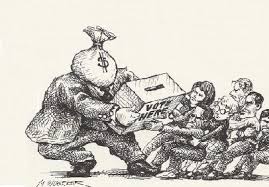
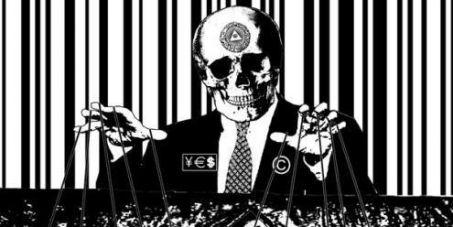
SURELY FOR THE WORLD, IT’S TIME WE ADDRESSED WHAT IS IMPORTANT TO ALL OF US

We spend more on ice cream than ensuring that the technologies we develop don’t destroy us. Now that we are all living through a global pandemic we need a much wider frame of reference for what is right and what is wrong. It shows to some extent that we can overcome the sense of “other,” and acknowledge that events in one part of the world can affect us all. The jury is out on whether COVID-19 will prompt the world to choose the route of national isolation or global solidarity, but a growing understanding that we are inherently connected to people in vastly different geographies and circumstances can help build momentum for strong climate action.

Everyday problems are everyday problems while hypothetical future ones can be left for tomorrow. If we continue to ignore the threat represented by advancing technologies such as Artificial intelligence, Bioengineering, Overdependence on the internet, Algorithms the problems that affect everyone are consequently owned by no one in particular. We are now with a Pandemic witnessing our civil freedoms becoming rules by big data. We have realized for a long time that we can destroy not only ourselves in a flash with nuclear war (we still have over 4000 nuclear warheads ) while we are only beginning to realize that this is not the only threatening thing to the survival of our species. Now might well be the time to think about what can be done to avoid a future cataclysm, a critical moment in our history, or leave ourselves as a civilization in the balance. If we make the right decisions perhaps we will see a future and not end up like the dodo or the dinosaurs.

On the one hand, this is a big ask as we have a little moral grasp of how our actions may affect the thousands of generations that could -or alternatively, might not -come after us. Sooner or later all questions of existential risk comes down to a global understanding and agreement that climate change similarly poses a major threat to human lives and urgently requires a comprehensive response. Unfortunately, we still have to learn that it is common bonds that are greater than our differences and we will not able to have this understanding while our economic systems are driven by profit and our political systems remain almost entirely national or federal. The belief that COVID-19 can solve our separation and act as one is magical thinking in its purest form. However individual countries can not afford to turn their backs on the world like the USA, at last not for long. The slogan that we are all in this together will ultimately require a kind of unity if we are to avoid greater afflictions in the future. Just because our survival isn’t on the line with COVID-19 Climate change is shaping up to be a global calamity of unprecedented scale.  As we are seeing with this pandemic global problems do not always have global solutions BUT REST ASSURED CLIMATE CHANGE WILL AND IS ALREADY DEMANDING A GLOBAL SOLUTION.  As the world recovers from COVID-19, we must not let short-term fixes prevent us from addressing longer-term risks like climate change.

  • The response to the pandemic illustrates five actions we can take to address the global climate change crisis.
  • These include making people the priority, listening to global perspectives, and trusting experts.

What happens over the coming months could go one of two ways. There is a risk that as the immediate crisis wanes and its economic consequences become clearer, we cast aside longer-term aspirations in pursuit of short-term easy fixes, many of which would have adverse environmental consequences. These include rolling back environmental standards, stimulating the economy by subsidizing fossil-fuel-heavy industries, and focusing on making more things, rather than using them better. With scientists warning, we have 10 years left to avoid the worst consequences of climate change, if the pandemic teaches us to acknowledge our vulnerability it could offer an opportunity to fix the climate crisis before it’s too late. We need to harness the present wave of compassion and proactivity to protect vulnerable people in all contexts, including those most exposed to climate impacts. Much remains uncertain about what the world will look like when we emerge from the COVID-19 pandemic, but the fundamental societal changes we are witnessing may well offer us a final chance to avoid a climate catastrophe. When we come out of this Pandemic switching to green energy with a green economy is one of the single biggest things you can do to cut your carbon emissions and to regenerate our common values with a future worth living as there is no future in carrying on without planet.